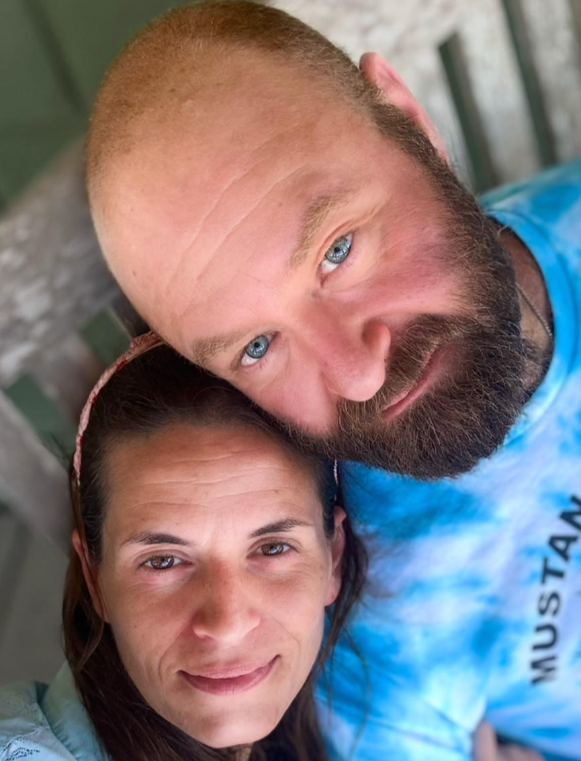
March 18, 2026
Dr. Brandon Beck
Lay Chaplain, COHI
Monk, The OOOW
Church of reconciliation, san antonio, TX
Theology Student, Brite Divinity School
In Education for Ministry, I learned about the metaphor of “the empty chair.” The mentor with whom I first trained years ago always brought a tiny, pewter chair to class with her and set it in the middle of our discussion table. Her message with “the empty chair” metaphor was simple and powerful at the same time: What perspective might we be forgetting? Whose voice in the world have we left out?
My theology professor, Dr. Natalya Cherry at Brite Divinity School, teaches a similar concept to that of “the empty chair;” she says, “Going with Jesus means going to those most marginalized, no matter how marginalized you are, especially when someone else is more marginalized.”
As Community of Hope pastoral caregivers, we follow Jesus into that work of caring for others in that deep, Baptismal Covenant way–that way that resists injustice and respects the dignity of every human being–even when those human beings don’t agree with us or even rub us the wrong way.
“The empty chair” reminds us to pause and wonder, “What might that person need, think, believe, or wonder?” Dr. Cherry’s philosophy calls us to reach out to others remembering they also are created in God’s image.
None of this is news to those of us in Community of Hope because we are steeped in Benedictine tradition and rooted in a framework of humility and hospitality. In the Rule of Benedict, as we begin again and again to read the words the early monastics read in order to live well together, we find this sage advice for our work as pastoral caregivers leaning into our commitment to justice:
You must relieve the lot of the poor, clothe the naked, visit the sick, and bury the dead. Go to help the troubled and console the sorrowing. Your way of acting should be different from the world’s way; the love of Christ must come before all else. You are not to act in anger or nurse a grudge. Rid your heart of all deceit. Never give a hollow greeting of peace or turn away when someone needs your love. Bind yourself to no oath lest it prove false, but speak the truth with heart and tongue. Do not repay one bad turn with another. Do not injure anyone, but bear injuries patiently. Love your enemies. If people curse you, do not curse them back but bless them instead. Endure persecution for the sake of justice. (RSB Chapter 4, lines 14-33, Timothy Fry OSB, Editor, 1980)
That section is part of Chapter 4 which has come to be known as “Tools for Good Works;” since Jesus was said to have been a carpenter, I love that Benedict gave us tools to use to do the work Jesus left us to do. Even if that work seems difficult–difficult like loving your enemies and enduring persecution.
Imagining the thoughts of that person represented by “the empty chair” and always moving toward the other sounds great, but sometimes we need a little more to sustain ourselves in this ministry to which we are called.
“Reflections from Christian Meditators” offers this suggestion for getting closer to God while using our “Tools for Good Works:”
In community we learn that nuances of perception and reality can be subtle, so much so that we confuse them without knowing it. We come together with our own ideas and understanding, our own trauma, our own colourings of people and the world. And while our perceptions of a happening, a circumstance, a person, might be close to the real, what could be the consequences of us acting on our perceptions? Is it, in that instance, loving another? Is it loving ourselves?
Too many times our reactions to injustice can be just that–reactions. There is risk here that we are reacting more from our own biased perspective and hurt. A more considered response comes from a freedom that arises from within a space of ongoing healing. And yet healing so often can seem illusive.
As we continue to live and move and have our being together in this world, let us remember “the empty chair” and wonder who might be in it and ask what they might have to say, what they might be thinking and believing. Let us work a little more, using all our tools which we have been given by our Creator to heal ourselves so that we can be sustained in our ministry as pastoral caregivers, remembering always that we do this together, always beginning again.